

Five Things #26 — Low Tech That Makes Your Life Better
From crank radios to tiny e-readers and kid-friendly landlines, a look at the slow-tech devices helping us read more, disconnect a little, stay entertained, and rely less on smartphones.

I spend a good deal of time in Five Things focusing on goods made in limited runs, produced slowly by hand or in small factories with a level of care that feels not so common today. Electronics and technology, on the other hand, are almost never discussed in that same way, being that they’re made in factories, using robots and computer chips and logic boards; these are not things that are really made by hand. Yet they still play a massive role in our everyday daily lives.
But yet, I doubt I’ll find anybody that says they want to get rid of technology completely seeing as it’s added tremendous convenience between things like buying plane tickets to banking.
When Apple released the first iPhone in 2007, it marked a real turning point for consumer technology. Suddenly, all of these separate devices, an iPod, the Internet, email, and a phone, were consolidated into one object that lived in our pockets. It made life easier, cleaner, and more connected.
But that convenience also created an entirely new ecosystem of apps, and while original designed to keep us holding those devices for as long as possible, that’s what they did today. Over time, the smartphone became less of a tool and more of a constant companion, one engineered around attention. And “doomscrolling” entered the conversation.1
Still, there is technology out there that I would consider slow. Devices that don’t demand your attention all day or force you to stare endlessly at a smartphone screen, but instead serve a focused purpose while having a genuinely positive impact on daily life.
That’s what today’s Five Things is about: slow tech with purposeful intent. None of these are smartphones.; you do not need another phone. What you may need, however, are tools that can help you disconnect a little, stay entertained in more intentional ways, or even keep you safe when the power goes out.
In today’s Five Things: slow tech that will make your life better.
— Jeff
XTEINK X4 4.3” E-Book Reader
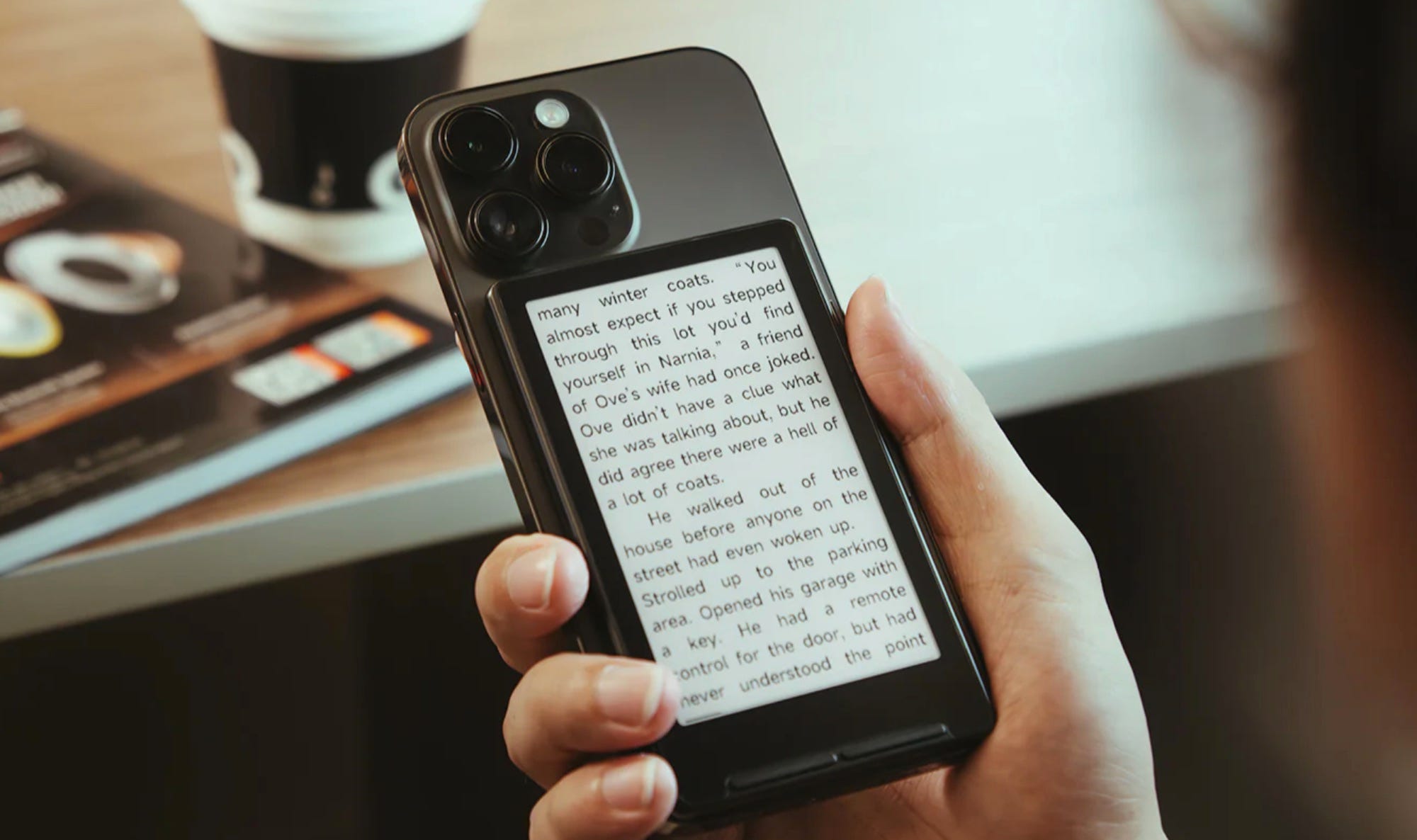
This little device has been going wild on Reddit for the better part of the last eight months. It’s an incredibly small e-reader from a basically unknown tech startup in Hong Kong called the XTEINK, and its X4 ebook reader measures in at just 4.3 inches, right around the size of the area below your camera on an Apple iPhone.
I came close to ordering XTEINK X4 on AliExpress back in October, but at the time I didn’t feel like I needed it because I was perfectly happy with my Kindle, and quite frankly, the user interface looked terrible. Looking back now, after seeing the flood of reviews for this tiny device on Reddit and the community of diehards that have worked to make the user experience better, it’s becoming clear that the X4 may represent the future of e-readers for three reasons:
Its size.
It’s meant to compliment and attach to the back of your iPhone using Magsafe.
It does nothing more than let you read books.
Many people view iPhones as machines built for doomscrolling. The XTEINK reader X4 feels like a response to that. It offers a small e-ink screen that can attach to the back of your phone, making it possible to flip your device over and simply read a book on a non-backlit e-ink screen.
What stands out most is just how small the device actually is. You don’t even need to keep it attached to your iPhone; it’s compact enough to carry on its own in a pocket. There have already been plenty of tests showing that it even fits comfortably in tight jeans, in particular. More than anything, it feels like a solution for people who want a screen in front of them that isn’t constantly pulling them into Instagram or social media, places that usually leave us with more noise than value.
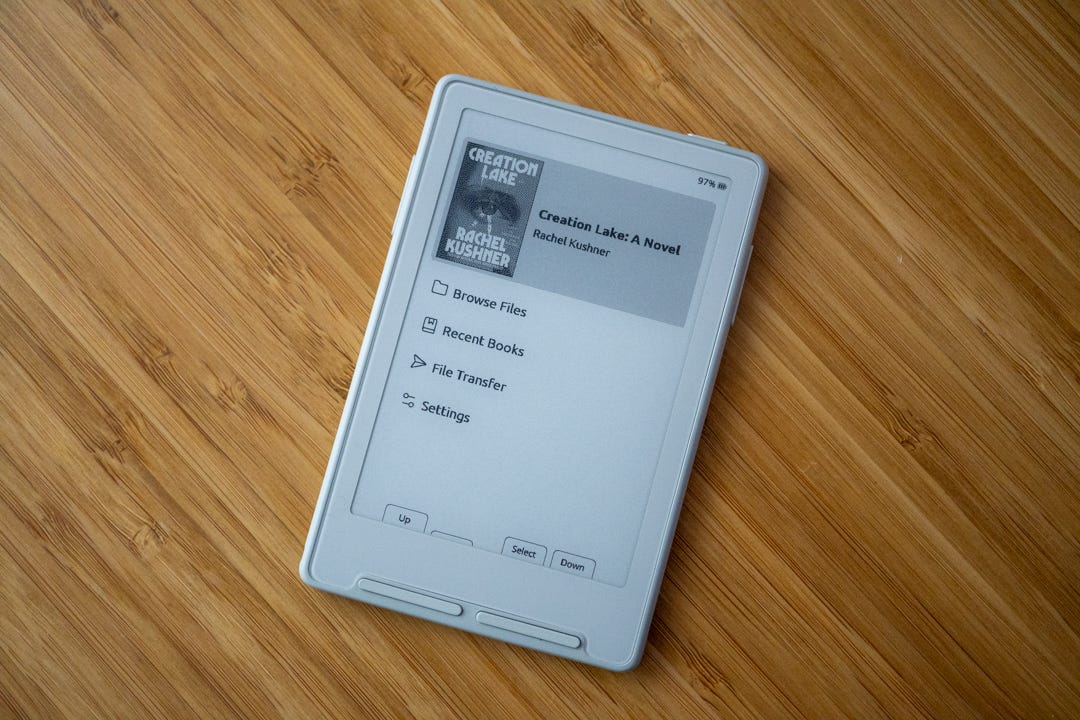
At $70, it’s shockingly inexpensive for an e-reader. A standard Kindle starts closer to $110, and that’s for an ad-supported model. The X4 reads books well and has no extra features, gimmicks, or touchscreen, unlike the Kindle, Kobo, or most other e-readers, which is part of its appeal. Instead, it uses two side buttons and two buttons on the front, making page-turning simple and intentional without the instinct to tap or swipe a screen.
It’s about as clean and minimal a reading device as you can find, and it’s quickly gaining traction. In just the last few months, it has climbed to become one of the top-selling e-readers on Amazon, sitting just behind Amazon’s own Kindle lineup and ahead of long-established competitors like Kobo. The real advantage comes down to size, price, and simplicity. This e-reader might be the best option available right now for anyone seeking a small device that complements daily life and helps reduce time spent on a smartphone.
While you can buy the XTEINK X4 device direct from the manufacturer. It’s probably best to buy it on Amazon for $70 simply for their excellent return policy in case quality control on yours is not up to par.
You’ll also want to check out the third party Crosspoint firmware upgrade to make it even better, and super easy to install.
Tin Can Kid’s Friendly Landline-Style Phones
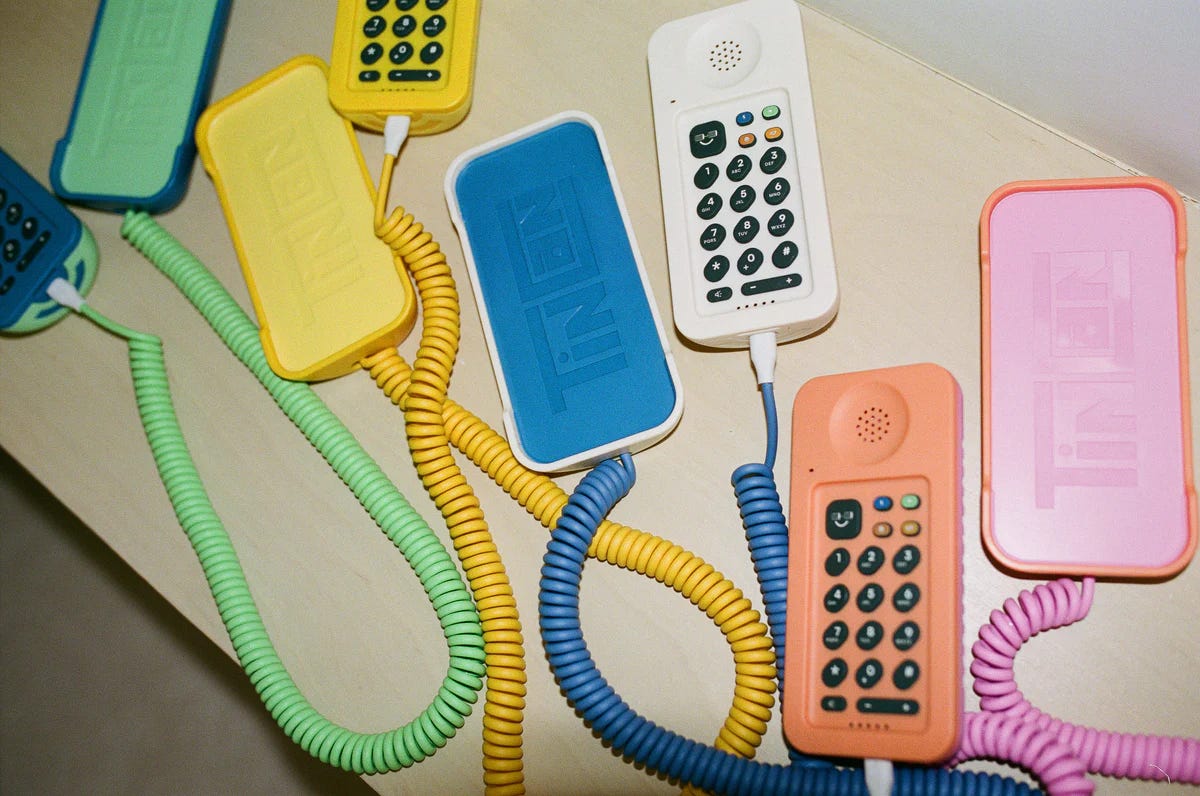
The Tin Can kid-friendly landline phone is one of those products that makes you wonder why nobody thought of it sooner. It’s a genuinely smart idea built around a simple goal: giving kids a way to communicate without handing them a smartphone.
At its core, the Tin Can is really just a Wi-Fi-powered landline, similar in concept to what Vonage was years ago. It’s a traditional-style phone with physical buttons designed only for making and receiving calls. There’s no texting, no social media, no apps, and no endless notifications pulling kids into a screen.
It’s honestly one of the best things I bought for my daughter over the last year. She uses it constantly to call friends, talk to her grandparents, and, more importantly, reach me when she needs to.
What makes the Tin Can so appealing is its simplicity. Your child gets a real phone number and the ability to make and receive calls, but without the distractions and responsibilities that come with a smartphone. I think most parents can agree that giving an 8-, 9-, 10-, or 11-year-old unrestricted access to a smartphone doesn’t always feel ideal, even though kids still want the independence of talking to their friends.
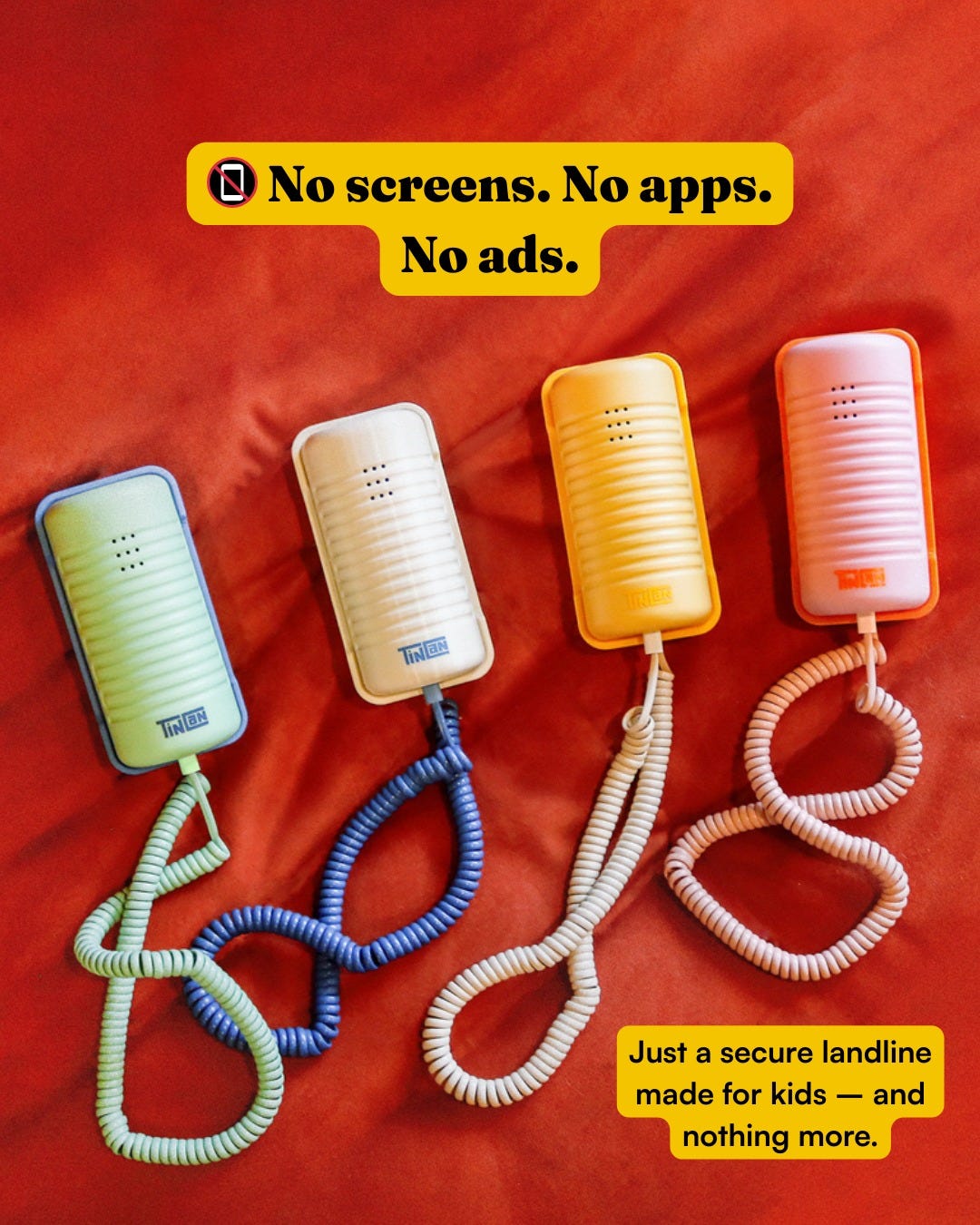
That’s where Tin Can makes a lot of sense. For around $9.99 a month, it gives kids a straightforward, screen-free way to communicate that feels much closer to what a phone call is supposed to be: picking up a receiver and simply talking to friends.
KLIM Nomad Portable CD Player
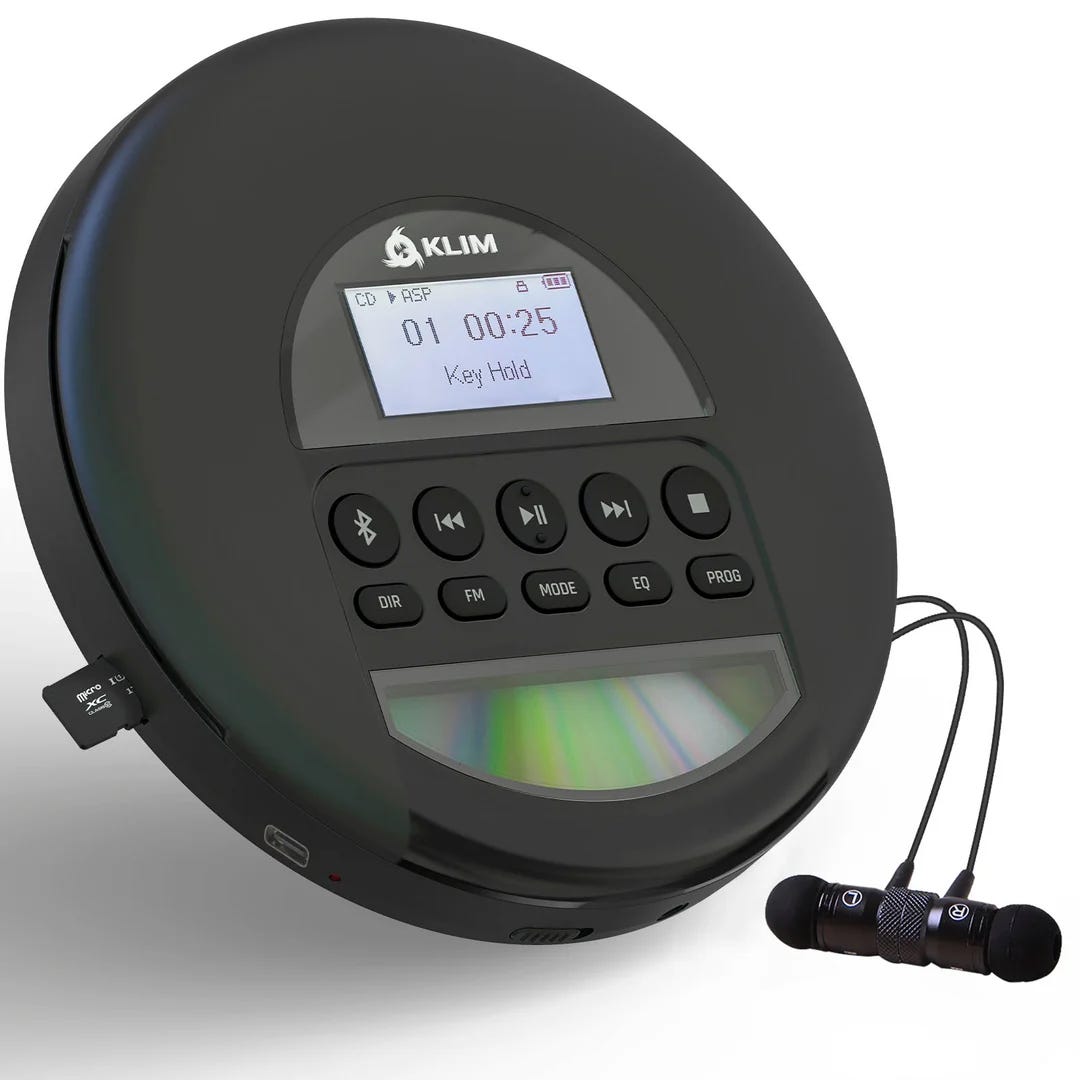
The world of cassettes and vinyl records has been steadily taking over physical music culture again. More than ever, I’m seeing stories about vinyl selling millions of copies and cassette tapes making a genuine comeback. Portable Walkmans are suddenly cool again, and I’ve even heard from friends whose kids, some as young as 8 or 10 years old, are asking for old Walkman players so they can carry them around the way previous generations once did.
Part of what makes cassettes special is the mixtape itself. A great mixtape always felt personal and intentional in a way Spotify playlists never quite replicate.
At the same time, CDs are quietly experiencing their own resurgence. Portable CD players are starting to reappear from brands like FiiO and others. And while they may sound “hi-fi,” many of them still feel bulky and overbuilt, lacking the sleek simplicity of the classic Sony Discman era with its rounded edges and nearly CD-sized footprint.
That’s where the KLIM Nomad Portable CD Player stands out. At around $60, it’s a compact modern Discman-style player with impressive battery life thanks to newer battery technology, along with a clean digital display showing track information and playback details.
It even includes a built-in AM/FM radio, which makes it surprisingly useful.
Honestly, half the fun now is hunting for discs in the first place. I can’t recommend enough stopping into a local Goodwill or thrift store just to see what’s sitting in the bins. CDs regularly sell for $2 or $3 each, a fraction of what they originally cost when labels were charging close to $20 per album while promoting CDs as the superior-sounding alternative to vinyl.
You’ll find the KLIM CD Player almost everwhere for $60.
Jackery Portable Power Station Explorer 300
Having a house in the wilderness, whether it’s a log cabin or a winter home tucked into the mountains, usually means having some kind of backup power. I know this firsthand from living in upstate New York, where cold weather, ice storms, and heavy rain regularly knock out power lines, sometimes for days at a time. That’s why generators running on diesel or propane are so common. They keep the heat on, the refrigerator running, and the basics functioning when the grid goes down.
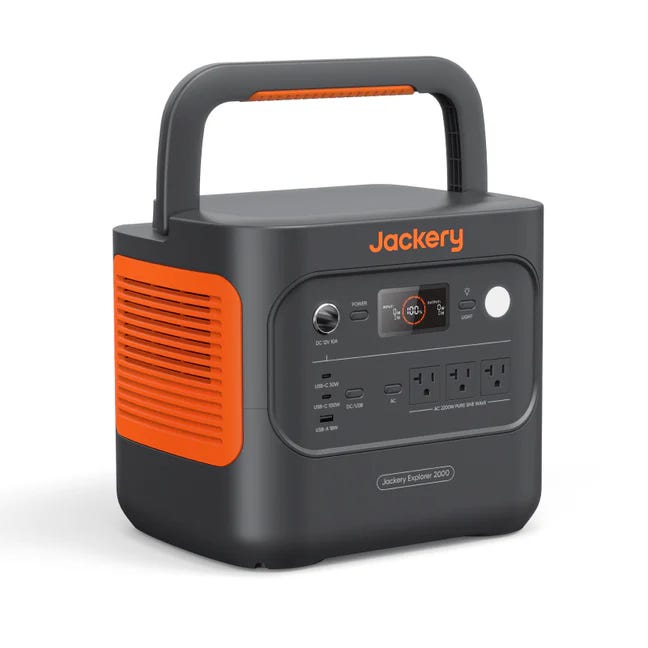
But those systems are large, expensive, and really designed for full-time homes. If you’re camping or spending time off-grid, what you need is something smaller that can keep your essential tech alive without overcomplicating things. That’s where the Jackery Explorer 300 comes in.
At around $220, it feels like a no-brainer addition to camping gear. It’s compact, easy to carry thanks to the built-in handle, and has enough ports to power the essentials, whether that’s a radio, an iPad, or just keeping phones charged in case something goes wrong.
Even if you’re trying to stay off your smartphone while in the wilderness, you still want emergency power available. A portable power station like the Jackery acts less like a luxury gadget and more like a safety net. If you’re using an electric burner, need emergency lighting, or simply want to keep critical devices running, it has more than enough power to handle the basics.
The point isn’t to recreate your entire life outdoors. It’s to keep the necessary pieces of technology functioning when you need them most. And at this price point, it’s hard not to see the value in throwing one into the back of the car before heading out.
Find the Jackery 300 Portable Power Station online for $220.
Midland ER310 Emergency Crank Weather AM/FM Radio
Now, I realize that for some people, the Jackery power station looks about the size of an IGLOO cooler, and probably isn’t something you want to lug deep into the woods. A simpler alternative, especially if your main concern is staying aware of weather and emergency conditions, is a crank-powered weather radio.
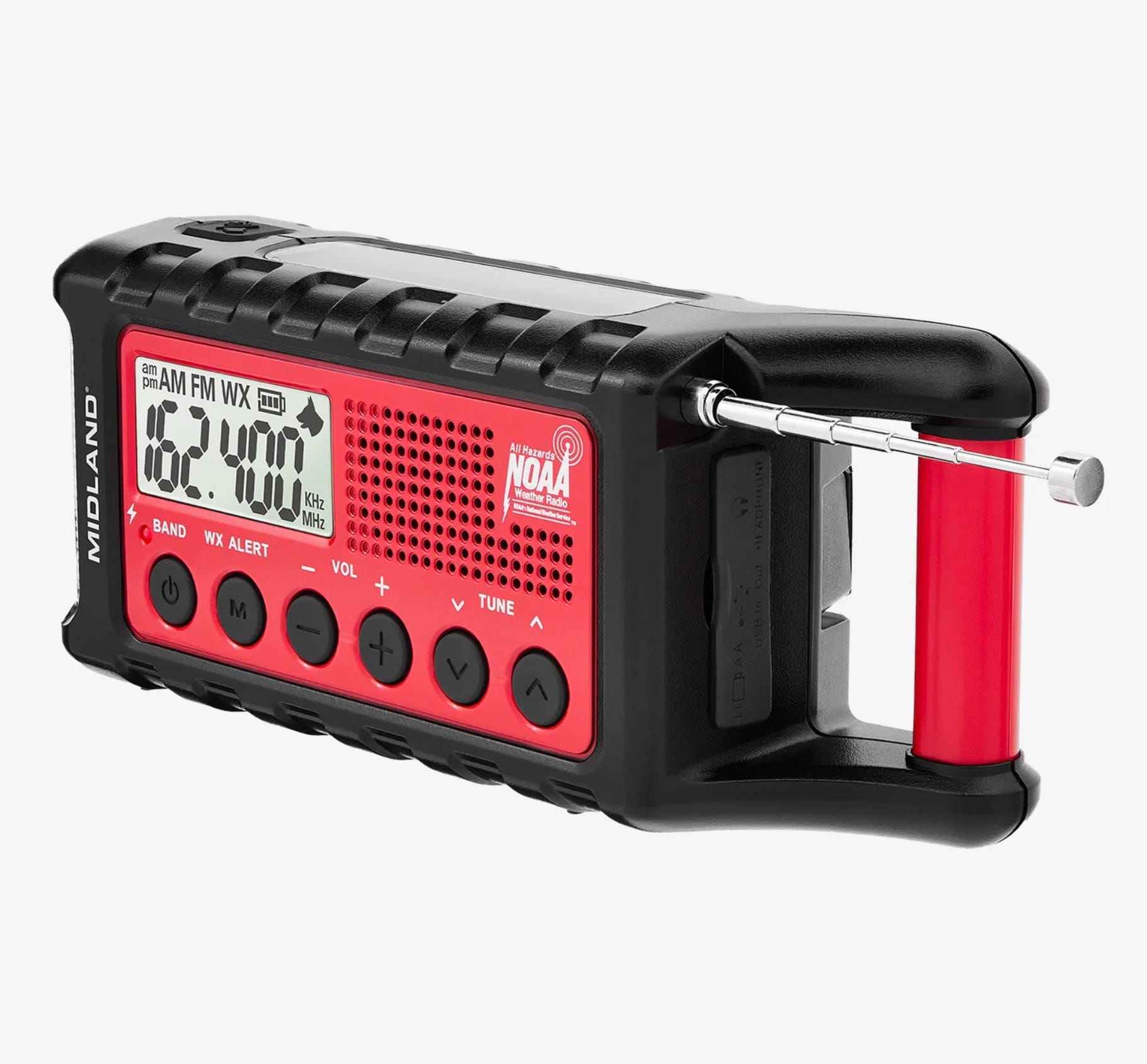
The hand crank is the key feature. Radios require very little power to operate, especially models with simple mono speakers, which means just a few minutes of cranking can provide a surprisingly long amount of listening time. That’s where the Midland ER310 comes in, and it’s honestly one of my favorite devices. It’s something I keep at my house in upstate New York for those moments when, god forbid, the generator runs out of diesel.
The ER310 is a compact digital radio capable of tuning into weather bands, specifically NOAA broadcasts, while also functioning as a flashlight and backup power source (barely). Just a few minutes on the crank can give you close to an hour of radio playback.
Another advantage is the built-in USB output. If you absolutely need to get emergency power into a smartphone while in the woods, it can do that too. You’re not going to quickly recharge a dead phone by hand-cranking a radio, but that’s not really the point. It’s there for emergencies, and in those moments, even a small amount of battery life can matter.
At around $80, Midland ER310 is another one of those devices that feels like a complete no-brainer to keep around.
I tore my calf muscle, aka tennis leg, and I keep catching myself doom scrolling into nothingness, hence why I started thinking about e-readers.